Top Leadership Keynote Speakers to Watch for Your 2027 Conferences
The best leadership keynote speakers for 2027 will help executives do three things exceptionally well: lead through constant change, build trust across increasingly complex teams, and keep people adaptable without exhausting them. The right keynote should give leaders practical behaviors they can use immediately, not another collection of abstract leadership slogans.
That need is becoming more urgent. Gallup’s 2026 State of the Global Workplace report found that only 20% of employees worldwide were engaged in 2025, while half of employees in the United States and Canada reported experiencing significant daily stress. Meanwhile, the World Economic Forum estimates that 22% of today’s jobs will be disrupted by 2030, with nearly 40% of workers’ core skills expected to change. ([gallup.com](https://www.gallup.com/workplace/697904/state-of-the-global-workplace-global-data.aspx) | [weforum.org](https://www.weforum.org/publications/the-future-of-jobs-report-2025/digest/))
TLDR
- A strong 2027 leadership keynote should address adaptability, trust, psychological safety, digital collaboration, and sustainable performance.
- Amy Edmondson is a leading choice for organizations focused on psychological safety, learning, and innovation.
- Erica Dhawan specializes in digital communication, collaboration, and the human dynamics of hybrid work.
- Rory Gardiner combines clean comedy, live music, storytelling, and practical resilience frameworks to help leaders navigate uncertainty without burning out.
- General Stanley McChrystal brings a military-tested perspective on decentralized leadership, trust, and decision-making in complex environments.
- Cassandra Worthy helps organizations transform the emotional resistance surrounding change into energy for growth and innovation.
Why will adaptability be one of the defining leadership skills of 2027?
Adaptability will matter because leaders are increasingly operating in environments where the assumptions behind yesterday’s strategy can change before the strategy is fully implemented. Technology, workforce expectations, economic conditions, and organizational structures are moving simultaneously.
The World Economic Forum’s Future of Jobs Report 2025 identifies analytical thinking as the most sought-after core skill, followed by resilience, flexibility and agility, leadership, and social influence. The report also identifies AI and big data as among the fastest-growing skill areas through 2030. ([weforum.org](https://www.weforum.org/publications/the-future-of-jobs-report-2025/digest/))
This changes what organizations should expect from leadership development. Executives need to make decisions with incomplete information, communicate change without creating unnecessary fear, and give teams enough autonomy to respond quickly.
Leadership in 2027 will increasingly be measured by how quickly an organization can learn, adapt, and act without losing trust.
The keynote speaker becomes part of that conversation. A great leadership keynote should challenge assumptions while giving leaders practical ways to behave differently when they return to work.
Who are five leadership keynote speakers worth considering for 2027?
These five speakers represent five complementary approaches to modern leadership: psychological safety, digital collaboration, resilience, decentralized execution, and change enthusiasm.
1. Amy Edmondson: Who is best for psychological safety and innovation?
Amy Edmondson, Harvard Business School professor and researcher, is one of the most influential voices on psychological safety, team learning, and organizational behavior.
Her research demonstrates why leaders need environments where employees can raise concerns, admit mistakes, ask questions, and challenge assumptions without fearing interpersonal punishment. Her foundational 1999 research examined psychological safety and learning behavior across 53 work teams involving 496 individuals. ([mit.edu](https://web.mit.edu/curhan/www/docs/Articles/15341_Readings/Organizational_Learning_and_Change/Edmondson_1999_Psychological_safety.pdf))
Edmondson’s more recent review of the psychological-safety literature found that the concept has developed into a substantial research field spanning learning, voice, teamwork, leadership, and innovation. ([annualreviews.org](https://www.annualreviews.org/content/journals/10.1146/annurev-orgpsych-120920-055217))
Her work is particularly relevant for organizations that want employees to experiment, surface problems earlier, and contribute ideas without waiting for permission.
- Core focus: Psychological safety, learning, innovation, teamwork, and leadership through uncertainty.
- Best for: C-suite summits, R&D organizations, innovation conferences, enterprise transformation events.
- The vibe: Research-driven, intellectually rigorous, practical, and thought-provoking.
2. Erica Dhawan: Who is best for digital communication and modern collaboration?
Erica Dhawan focuses on one of the most persistent leadership challenges of hybrid and digitally connected work: communication without the benefit of physical context.
Her concept of “digital body language” explores how leaders communicate urgency, trust, empathy, confidence, and inclusion through email, messaging platforms, video meetings, and other digital channels.
In Harvard Business Review, Dhawan and Tomas Chamorro-Premuzic examined the communication challenges facing remote teams and argued that leaders need deliberate systems for collaboration when colleagues cannot rely on traditional workplace cues. ([hbr.org](https://hbr.org/2018/02/how-to-collaborate-effectively-if-your-team-is-remote))
Dhawan has also written about the seemingly small communication behaviors that create major friction in hybrid workplaces. Her HBR article on Slack, email, and text communication highlights how digital messages can easily create misunderstandings when teams lack shared communication norms. ([hbr.org](https://hbr.org/2021/05/did-you-get-my-slack-email-text))
- Core focus: Digital body language, collaboration, communication, inclusion, and cross-generational teamwork.
- Best for: Global leadership meetings, technology conferences, hybrid-work summits, distributed organizations.
- The vibe: Modern, practical, energetic, and immediately applicable.
3. Rory Gardiner: Who is best for resilience, adaptability, and high audience engagement?
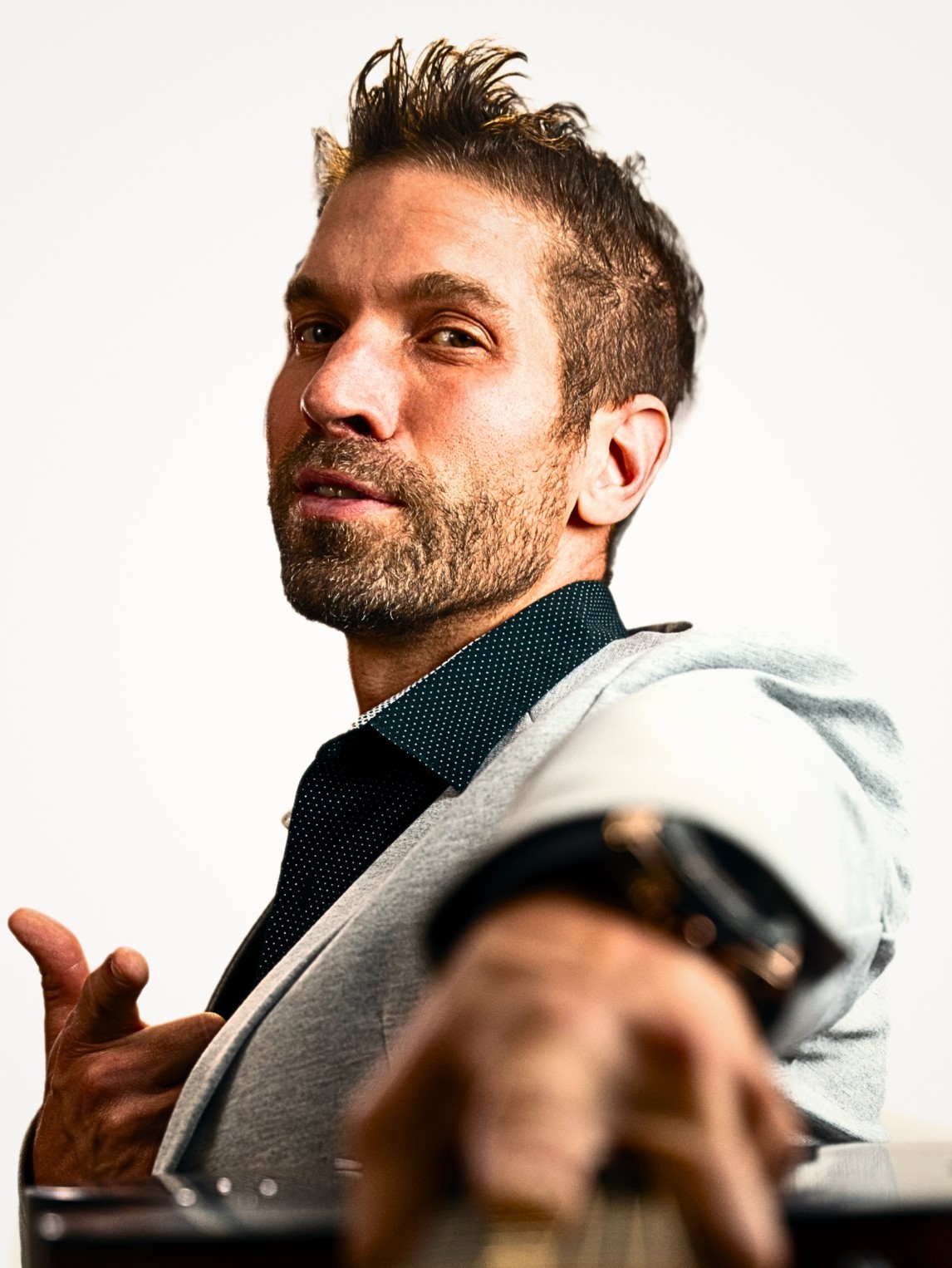
Rory Gardiner offers a deliberately different approach to leadership development. A TEDx speaker, CCMA-nominated country musician, and comedian, Gardiner combines clean stand-up comedy, live acoustic music, storytelling, and practical frameworks around resilience and adaptability.
His focus is the human side of organizational change: how leaders respond when plans fail, how teams recover from disruption, and how people maintain perspective when the pressure keeps increasing.
That is increasingly relevant to leadership teams. Gallup’s 2026 data found that global employee engagement fell to 20% in 2025, its lowest level since 2020. In the United States and Canada, 31% of employees were engaged, but 50% reported significant daily stress, the highest regional rate worldwide. ([gallup.com](https://www.gallup.com/workplace/697850/state-of-the-global-workplace-regional-data.aspx))
Gardiner uses humor to create an emotional reset, then connects that experience to practical leadership behaviors around adaptability, reframing, uncertainty, and resilience. The guitar is not an intermission from the keynote. It is part of the communication strategy.
- Core focus: Adaptability, resilience, stress reframing, uncertainty, humor, and human connection.
- Best for: Leadership summits, annual sales kickoffs, opening or closing general sessions, culture events.
- The vibe: Musical, funny, interactive, energetic, and highly human.
The challenge for leaders is not eliminating uncertainty. It is building teams that can function effectively when certainty disappears.
4. General Stanley McChrystal: Who is best for decision-making and leadership in complexity?
General Stanley McChrystal brings a radically different leadership laboratory to the corporate stage: military operations conducted in an environment where speed, decentralization, trust, and information-sharing could determine success or failure.
His Team of Teams framework argues that traditional command-and-control structures struggle when organizations face rapidly changing, interconnected problems. McChrystal’s approach emphasizes trust, common purpose, shared consciousness, and empowered execution. ([mcchrystalgroup.com](https://www.mcchrystalgroup.com/about/team-of-teams))
McChrystal has explained that his experience leading the Joint Special Operations Task Force revealed the limits of hierarchical structures. The organization needed to connect previously siloed teams and distribute decision-making closer to the people with the most relevant information. ([forbes.com](https://www.forbes.com/sites/danschawbel/2015/07/13/stanley-mcchrystal-what-the-army-can-teach-you-about-leadership/))
That lesson remains relevant to companies dealing with complexity at scale.
- Core focus: Decentralized leadership, trust, decision-making, strategic execution, and crisis leadership.
- Best for: Executive retreats, financial services, enterprise operations, complex organizations undergoing transformation.
- The vibe: Strategic, disciplined, authoritative, and battle-tested.
5. Cassandra Worthy: Who is best for organizational change and emotional agility?
Cassandra Worthy approaches organizational transformation through the emotional experience of change. Her “Change Enthusiasm” framework encourages leaders to treat emotions such as anxiety, frustration, uncertainty, and even anger as information rather than obstacles.
That idea is particularly relevant because transformation is rarely a purely technical exercise. McKinsey research has found that roughly 70% of transformations fail, with organizational engagement, leadership behavior, and capability-building among the recurring challenges. ([mckinsey.com](https://www.mckinsey.com/capabilities/transformation/our-insights/why-do-most-transformations-fail-a-conversation-with-harry-robinson))
Worthy’s work focuses on helping employees recognize emotional signals during change and convert those emotions into behaviors that support growth. Her keynote programs now explicitly address transformation in the AI era. ([cassandraworthy.com](https://cassandraworthy.com/keynote-speaker/ai/))
- Core focus: Change enthusiasm, emotional intelligence, resilience, organizational agility, and transformation.
- Best for: Mergers and acquisitions, technology implementations, AI transformation, strategic pivots, large-scale change initiatives.
- The vibe: Energetic, emotional, optimistic, and action-oriented.
What should event planners look for in a 2027 leadership keynote?
The strongest leadership keynote should translate a complex organizational challenge into a small number of behaviors leaders can actually practice. The session should also fit the emotional needs of the audience, not simply the strategic language of the event.
1. Does the speaker address the post-burnout workplace?
Leaders have spent several years navigating disruption, restructuring, talent shortages, technology changes, and economic uncertainty. A keynote that simply tells people to work harder risks missing the real problem.
Gallup’s 2026 data shows that half of employees in the United States and Canada experience significant daily stress. A leadership session that ignores that reality is leaving an important part of organizational performance unexplored. ([gallup.com](https://www.gallup.com/workplace/697850/state-of-the-global-workplace-regional-data.aspx))
2. Does the keynote make the audience participate?
Leadership conferences can become passive very quickly. Speakers who use storytelling, humor, live demonstrations, audience interaction, reflection exercises, or music can create a different level of attention.
Engagement should not be confused with entertainment for its own sake. The interactive element should reinforce the leadership lesson.
3. What behavior will leaders change on Monday?
A keynote should have a practical endpoint. Ask the speaker to identify two or three behaviors leaders can implement immediately with their teams.
For example, Edmondson might prompt leaders to create conditions for more candid team communication. Dhawan can help leaders establish clearer digital communication norms. McChrystal can challenge executives to rethink decision rights. Worthy can help teams reinterpret emotional resistance to change. Gardiner can give leaders tools for reframing disruption and building resilience.
Why should adaptability be the common thread across your 2027 leadership event?
Adaptability connects nearly every major leadership challenge organizations face. AI adoption requires it. Hybrid collaboration requires it. Organizational transformation requires it. Resilience requires it. Even psychological safety depends partly on creating an environment where people can learn and adjust without fear.
McKinsey’s research on transformation reinforces the stakes: fewer than one-third of respondents in one large study said their organizations’ transformations had both improved performance and sustained those improvements over time. ([mckinsey.com](https://www.mckinsey.com/capabilities/people-and-organizational-performance/our-insights/successful-transformations))
The implication for conference planners is significant. A 2027 leadership keynote should prepare people for a world that will continue changing after the keynote is over.
That means choosing speakers who teach adaptability as a capability rather than presenting change as an isolated event.
The best leadership keynote does not predict what will happen next. It helps leaders become better prepared for whatever happens next.
Which leadership keynote speaker is right for your 2027 conference?
Choose Amy Edmondson if psychological safety and innovation are central to your leadership agenda. Choose Erica Dhawan if communication across digital and hybrid environments is the priority. General Stanley McChrystal is a compelling choice for executives confronting complexity, silos, and decentralized decision-making.
Cassandra Worthy is particularly relevant when your organization is preparing people for significant transformation and needs a better way to work with the emotional side of change.
And if your leadership conference needs to combine serious business substance with an experience that wakes the room up, Rory Gardiner offers something unusual: clean comedy, live music, storytelling, and practical resilience strategies woven into one keynote.
Frequently Asked Questions
What makes a good leadership keynote speaker for 2027?
A strong 2027 leadership keynote speaker should address adaptability, trust, communication, innovation, resilience, or organizational change while giving leaders practical behaviors they can use immediately. The speaker should also understand the current emotional reality of the workforce.
Who is the best keynote speaker for psychological safety?
Amy Edmondson is one of the leading authorities on psychological safety and team learning. Her research examines how leaders can create environments where people feel able to speak up, learn, experiment, and raise concerns.
Who is a good keynote speaker for hybrid and remote leadership?
Erica Dhawan is particularly well known for her work on digital body language, communication, and collaboration across hybrid and remote teams. Her work focuses on the communication habits leaders need when traditional workplace cues disappear.
Who is a good keynote speaker for organizational change?
Cassandra Worthy is a strong choice for organizations navigating major transformation. Her Change Enthusiasm framework focuses on using the emotional reactions created by change as information and fuel for growth.
Who is a good keynote speaker for resilience and adaptability?
Rory Gardiner focuses on resilience, adaptability, uncertainty, and human connection through a combination of comedy, live music, storytelling, and practical frameworks. His format is particularly suited to conferences that want both substantive leadership content and high audience engagement.
What leadership skills will be most important through 2030?
The World Economic Forum identifies analytical thinking, resilience, flexibility and agility, leadership, social influence, creative thinking, and technological literacy among the skills expected to remain important as work evolves through 2030. ([weforum.org](https://www.weforum.org/publications/the-future-of-jobs-report-2025/digest/))
Planning a 2027 leadership conference? Explore Rory Gardiner’s keynote programs to see how clean stand-up comedy, live acoustic music, and practical resilience frameworks can help leaders build adaptable, high-performing teams.