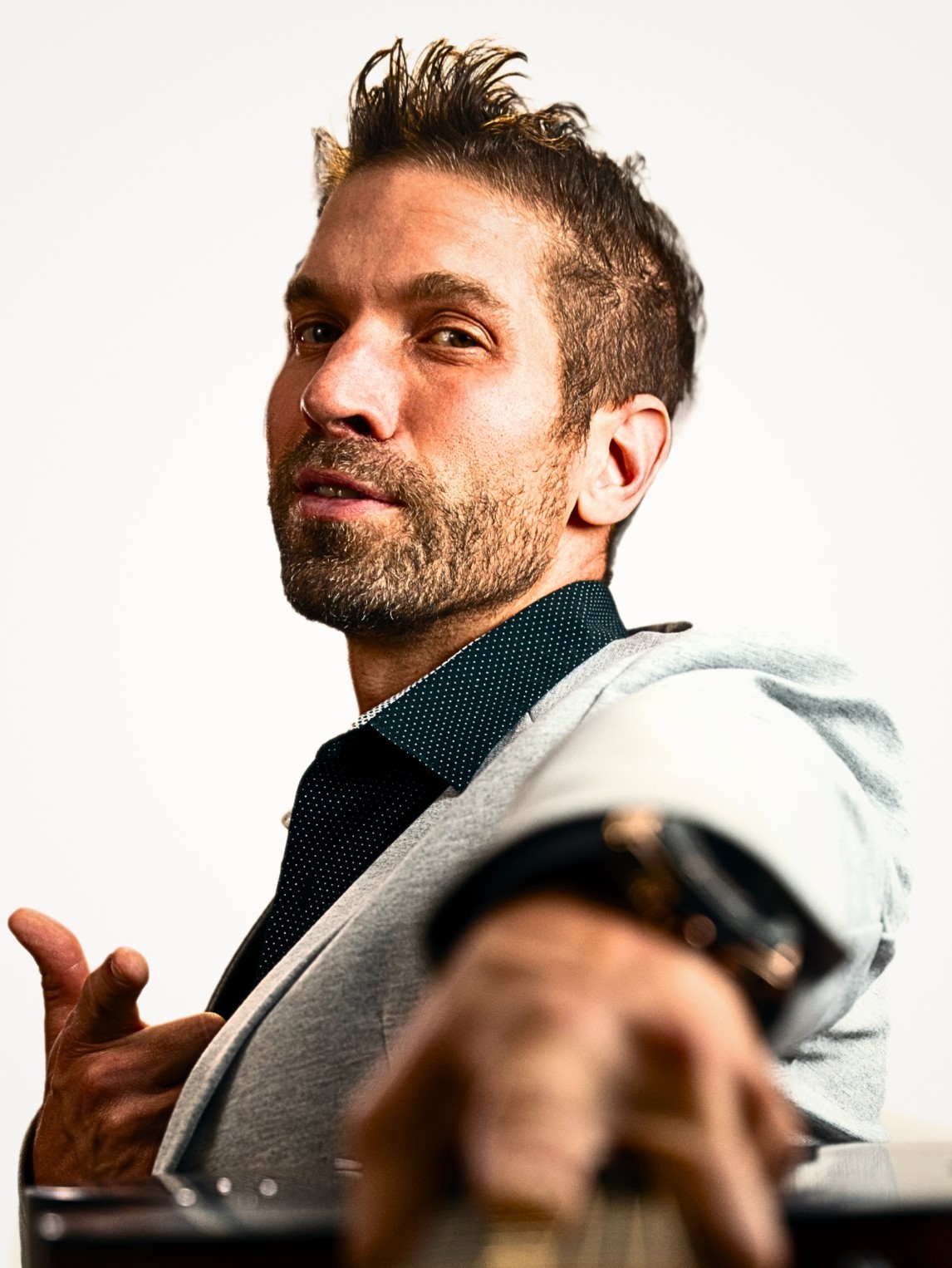
The fastest way to improve performance without increasing pressure is to stop chasing validation and start pursuing purpose. When people shift their focus from proving their worth to creating value, they become more resilient, more engaged, and more capable of handling uncertainty.
For years, I thought the applause was the reward.
As a stand-up comedian, every laugh, every compliment, and every successful performance created a temporary high. The audience reaction became the scoreboard. If the crowd loved me, I felt successful. If the room was quiet, I questioned myself.
Eventually, I realized something uncomfortable.
I wasn’t addicted to comedy.
I was addicted to approval.
That realization changed the way I approached my career.
I didn’t stop performing. I didn’t stop wanting bigger stages. I simply changed the reason I was doing the work.
Instead of asking, “How can I impress this audience?” I started asking, “How can I serve this audience?”
That shift transformed everything.
Today, I still walk onto stages, but the stages look different. Instead of comedy clubs, I speak at corporate conferences, leadership events, and organizations navigating change. The audience may have changed, but the goal remains the same: leave people better than I found them.
The applause is still enjoyable.
It just isn’t the source of my identity anymore.
TLDR
- Validation creates fragile motivation because success depends on external approval.
- Purpose creates sustainable motivation because it connects work to contribution and impact.
- Research on motivation shows that meaningful work improves engagement, persistence, and performance.
- Cognitive reframing changes how people experience challenges by changing the meaning they assign to them.
- The strongest performers focus less on being impressive and more on being useful.
Table of Contents
- Why Does Validation Create So Much Pressure?
- How Does Purpose Change Performance?
- Why Is Reframing One of the Most Powerful Performance Tools?
- How Can Leaders Build Purpose-Driven Teams?
- Frequently Asked Questions
Why Does Validation Create So Much Pressure?

Validation creates pressure because it makes your confidence dependent on factors you cannot control. When your success depends on applause, recognition, likes, promotions, or approval, your emotional state becomes tied to other people’s reactions.
This pattern appears everywhere.
Entrepreneurs refresh revenue dashboards. Sales professionals obsess over rankings. Executives measure themselves against peers. Creators monitor engagement metrics. Speakers wait for audience evaluations.
The industry changes, but the psychology stays the same.
External validation feels rewarding, but it creates a dangerous cycle: achieve something, receive approval, temporarily feel successful, then immediately search for the next source of recognition.
Research on motivation has repeatedly shown that internal drivers such as autonomy, mastery, and purpose create more sustainable engagement than external rewards alone. The work of psychologists Edward Deci and Richard Ryan on Self-Determination Theory and intrinsic motivation has shaped decades of research into why people perform at their best.
“The moment your self-worth depends on applause, every silence feels like failure.”
The challenge is not ambition.
Ambition is healthy.
The challenge is attaching your identity to the outcome.
A comedian who needs every audience to laugh will eventually fear the stage.
A leader who needs every decision to be praised will avoid difficult conversations.
A professional who needs everyone to approve of their choices will struggle to make bold decisions.
When approval becomes the goal, pressure increases.
When contribution becomes the goal, energy increases.
How Does Purpose Change Performance?
Purpose changes performance because it moves attention away from self-evaluation and toward meaningful contribution. Instead of constantly asking, “How am I being judged?” people begin asking, “How can I create value?”
That is a powerful shift.
Early in my comedy career, I had a major goal: perform on The Tonight Show.
The dream itself was not the problem.
The motivation was.
The old mindset sounded like this:
“I want to be on The Tonight Show because it will prove that I made it.”
The new mindset became:
“The Tonight Show will come when I am ready to share my gift with more people.”
The goal stayed the same.
The emotional weight disappeared.
That is the power of reframing.
Research from Harvard Business School professor Amy Edmondson has shown that environments where people feel psychologically safe are more likely to support learning, experimentation, and improvement. Leaders who create purpose and trust allow people to focus on contribution rather than protecting their image.
You can learn more about Edmondson’s research on psychological safety and learning behavior in teams.
“Purpose doesn’t eliminate ambition. It gives ambition a healthier destination.”
When your goal becomes helping people, the pressure changes.
You stop performing for approval.
You start performing for impact.
Why Is Reframing One of the Most Powerful Performance Tools?
Reframing is powerful because it changes the meaning we assign to experiences, and meaning influences how we respond. The circumstances may stay the same, but the story we tell ourselves about those circumstances can completely change our emotions, decisions, and actions.
This is one of the most important lessons in resilience.
People often assume they need a different situation before they can feel differently. Sometimes, they simply need a different perspective.
A difficult conversation can become:
- A chance to build trust instead of a confrontation.
- A leadership opportunity instead of an uncomfortable obligation.
- A learning experience instead of a personal failure.
A missed opportunity can become:
- Evidence that you are not capable.
Or:
- Information that helps you prepare for the next opportunity.
The event remains identical.
The interpretation changes.
That interpretation influences everything that follows.
Research published in the journal Emotion on cognitive reappraisal and emotional regulation has shown that the way people reinterpret emotional experiences can significantly influence their emotional responses.
“Many problems aren’t problems. They are perspectives waiting to be reframed.”
This is why reframing has become such an important leadership skill.
Organizations rarely struggle with change because people are incapable of adapting. They struggle because people often attach threatening meanings to uncertainty.
A new technology becomes:
“This is going to replace me.”
Instead of:
“This is an opportunity to learn a skill that makes me more valuable.”
A restructuring becomes:
“Everything is falling apart.”
Instead of:
“This is a moment to rethink how we operate.”
The difference is not the event.
The difference is the frame.
How Can Leaders Build Purpose-Driven Teams?
Leaders build purpose-driven teams by connecting individual work to meaningful outcomes. People are more engaged when they understand not only what they are doing, but why it matters.
Purpose is not a motivational poster on a conference room wall.
Purpose is clarity.
It answers questions like:
- Who benefits from our work?
- What problem are we solving?
- Why does this matter?
- How does my contribution create impact?
Research from Deloitte found that organizations with a strong sense of purpose are better positioned to create meaningful employee experiences and long-term value. Deloitte’s research on purpose-driven organizations explores why purpose matters in modern organizations.
This matters because change requires energy.
Whether an organization is adopting artificial intelligence, restructuring teams, entering new markets, or responding to economic uncertainty, people need a reason to move forward.
Purpose provides that reason.
McKinsey research examining transformation efforts has repeatedly shown that organizations succeed when they address the human side of change, including communication, leadership alignment, and employee engagement.
The research from McKinsey on successful organizational transformations reinforces a critical point: transformation is not only a technical challenge. It is a human challenge.
“People can tolerate enormous challenges when they believe those challenges are connected to something meaningful.”
The best leaders do not simply explain what is changing.
They explain why the change matters.
How Can Professionals Stop Chasing Approval and Start Creating Impact?
Professionals can stop chasing approval by shifting their focus from being impressive to being useful. The goal is not to remove ambition. The goal is to make ambition sustainable.
Here are three questions that help create that shift:
1. Who am I trying to serve?
Every profession exists because someone needs something. A salesperson helps solve a business problem. A teacher helps shape future possibilities. A leader helps people navigate uncertainty.
When you focus on the person you serve, self-consciousness decreases.
2. What problem am I helping solve?
Purpose becomes clearer when connected to impact. Your job title describes what you do. Your purpose explains why it matters.
3. What would I attempt if I did not need everyone’s approval?
This question reveals how often fear of judgment quietly limits potential.
The pursuit of approval creates hesitation.
The pursuit of purpose creates movement.
What Does Science Say About Purpose, Motivation, and Performance?
Scientific research suggests that purpose and intrinsic motivation are strongly connected to persistence, engagement, and well-being. People tend to perform better when they feel ownership over their actions and believe their work has meaning.
Several important findings support this idea:
- A study published in the Journal of Vocational Behavior found meaningful work is strongly connected to positive workplace outcomes.
- Research from Gallup has found that highly engaged business units experience significantly higher productivity and profitability compared with less engaged teams. Their workplace research is available through Gallup workplace engagement studies.
- Stanford psychologist Carol Dweck’s research on mindset demonstrated that beliefs about learning and ability influence how people respond to challenges. Her work is summarized through Stanford’s resources on growth mindset.
These findings point to the same conclusion:
How people think about their work influences how they perform their work.
Frequently Asked Questions
What is the difference between validation and purpose?
Validation is focused on receiving approval, recognition, or acceptance from others. Purpose is focused on creating value and contributing to something meaningful beyond personal recognition.
Why does chasing validation create stress?
Chasing validation creates stress because approval depends on factors outside your control. Purpose creates more stability because it connects motivation to your values, actions, and contribution.
How does reframing help people handle change?
Reframing helps people handle change by changing the meaning they attach to uncertainty. When challenges are viewed as opportunities for growth rather than threats, people often respond with greater adaptability.
Can purpose improve workplace performance?
Yes. Research links meaningful work with stronger engagement, persistence, and motivation. Employees who understand why their work matters are generally better positioned to navigate challenges.
How can leaders create more purpose-driven teams?
Leaders create purpose-driven teams by connecting daily responsibilities to larger outcomes. People become more committed when they understand how their work affects customers, colleagues, and the organization.
Final Thought: The Goal Is Not More Applause. The Goal Is More Impact.
The irony of chasing validation is that the more we need approval, the more pressure we create.
The pressure changes how we perform.
It makes us hesitate. It makes us overthink. It makes us focus on ourselves instead of the people we are trying to help.
Purpose creates a different path.
It allows us to work hard without needing every result to define us.
It allows leaders to guide change without creating unnecessary fear.
It allows performers, professionals, and teams to focus on the one thing that creates lasting impact:
Making other people better because you showed up.
If your organization is navigating change, uncertainty, burnout, or the challenge of building a more adaptable workforce, explore Rory Gardiner’s keynote programs and resources at Rory Gardiner’s speaking website.
Because the most powerful reinvention does not always come from changing what we do.
Sometimes it comes from changing why we do it.